
Bone conduction headphones were originally a runner’s niche product, but the best bone conduction headphones in 2025 have evolved into legitimate everyday audio devices that people wear for commuting, office work, housework, and casual listening alongside their original athletic purpose. Open-ear headphones that deliver decent sound quality while maintaining full environmental awareness solve a daily problem traditional headphones create: the forced choice between audio and awareness. For everyday use specifically, the selection criteria shift from pure sport performance (sweatproofing and bounce resistance) toward comfort during 4–6 hour sessions, sound quality for music and calls, and battery life that covers a full day without charging.
The best bone conduction headphones for everyday use balance sound quality (acceptable for music, excellent for calls and podcasts), all-day comfort (lightweight, low-pressure contact, no ear fatigue), sufficient battery life (8+ hours for full workday coverage), and multipoint connectivity for switching between phone and computer throughout the day without re-pairing.
This guide evaluates bone conduction options specifically through the everyday-use lens—not the athletic-use lens that dominates most reviews — because what makes a great running headphone doesn’t always make a great all-day office companion.
What Makes Everyday Bone Conduction Different from Sport Models?
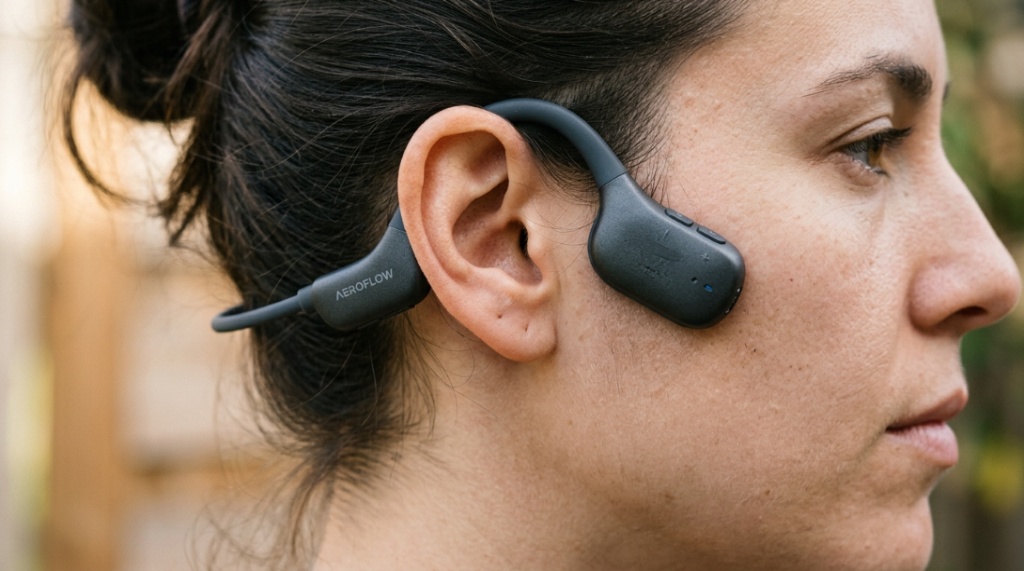
Everyday use prioritizes comfort during extended static wear (sitting at a desk), sound quality for varied content (music, calls, videos), and connectivity features (multipoint, low latency for video). Sport models prioritize fit security during movement, sweat resistance, and lightweight construction — features that matter less when you’re mostly stationary.
Priority comparison:
| Feature | Sport Use Priority | Everyday Use Priority |
|---|---|---|
| Fit Security (anti-bounce) | Critical — must survive running impact | Moderate — must stay put during head turns |
| Water Resistance | High (IPX5+ for sweat) | Low (IPX4 sufficient for rain) |
| Weight | Critical — lighter = less bounce | Important — lighter = less fatigue over hours |
| Sound Quality | Moderate — audio secondary to awareness | High — music enjoyment is primary purpose |
| Battery Life | 6–8 hours sufficient for training | 8–10+ hours needed for full workday |
| Multipoint Bluetooth | Unnecessary — single phone connection | Important — phone + computer switching |
| Microphone Quality | Basic (emergency calls only) | High — daily work calls and video meetings |
| Comfort for 4+ Hours | Less relevant (sessions are 1–2 hours) | Critical — all-day wear requirement |
A headphone that excels at sport may underperform for everyday use — and vice versa. The Shokz OpenComm (designed for communication) outperforms the Shokz OpenRun (designed for running) as an everyday device despite being a “worse” sport headphone.
Which Bone Conduction Headphones Are Best for All-Day Office Wear?
The Shokz OpenComm 2, Shokz OpenRun Pro 2, and Philips TAA7607 deliver the best office-day experience combining clear call microphones, comfortable extended wear, multipoint connectivity, and sound quality adequate for background music during focused work.
Top everyday bone conduction options:
- Shokz OpenComm 2 ($169): Best for calls — boom microphone with DSP noise cancellation delivers professional-grade voice quality. Multipoint. 16-hour battery. Slightly heavier due to mic boom but excellent for communication-heavy work. Open-ear design lets you hear office environment naturally.
- Shokz OpenRun Pro 2 ($179): Best sound quality in bone conduction. Enhanced bass processor. 10-hour battery. Multipoint. Lightweight titanium band. Originally designed for sport but sound quality improvements make it the best all-around everyday option.
- Philips TAA7607 ($179): Unique design with both bone conduction AND small open-ear air conduction drivers for enhanced sound quality. 9-hour battery. Good microphone. Slightly bulkier but delivers the best music experience of any bone conduction option.
- Shokz OpenRun ($129): Best value for everyday use. Good sound, reliable Bluetooth, 8-hour battery. Lacks multipoint but does everything else competently at $50 less than premium options.
For detailed comparisons and current pricing, the best bone conduction headphones guide reviews these models with office-specific testing including call quality and all-day comfort assessment.
How Important Is Battery Life for Everyday Bone Conduction Use?
Very important — everyday use means 6–10 hours of continuous wear. A bone conduction headphone with only 6 hours of battery dies mid-afternoon during a standard workday. Target 8+ hours for comfortable daily use without midday charging anxiety.
Battery requirements by daily pattern:
- Light office use (4–6 hours, intermittent): 6-hour battery is minimally acceptable. You’ll need to charge overnight without exception.
- Full workday (8–10 hours, mostly continuous): 8–10 hour battery required. Provides buffer for longer days without panic charging.
- Commute + workday (10–12 hours total): 10+ hour battery or quick-charge capability essential. The Shokz OpenComm 2 at 16 hours covers this scenario comfortably without any charging planning.
Quick-charge value for everyday use: a 15-minute charge providing 3–4 hours of playback saves the situation when you forget to charge overnight. This feature is more practically valuable for everyday users than the maximum battery rating itself. Unlike traditional earbuds, open-ear technology doesn’t block the ear canal, making it an excellent option for users with specific hearing needs. To explore more about inclusive wireless tech, read our guide on Bluetooth Accessibility for People with Disabilities.
Do Bone Conduction Headphones Work Well for Video Meetings?
Yes — bone conduction headphones with quality microphones work excellently for video meetings. The open-ear design provides a natural conversation feel (you hear your own voice normally), and models with boom microphones (Shokz OpenComm) deliver voice clarity matching dedicated headsets at a fraction of their bulk.
Video call performance factors:
- Microphone quality: Boom mic models (OpenComm) deliver the clearest voice. Non-boom models use beamforming mics on the band that perform adequately in quiet rooms but struggle in noisy shared offices.
- Background noise handling: Since your ears are open, YOU hear office noise — but modern DSP in the microphone filters most background noise from what others hear on the call. Your experience is noisier than their experience of your voice.
- Latency: Modern bone conduction headphones have low enough latency for video calls without lip-sync issues. Not ideal for professional audio/video production but perfectly adequate for Zoom/Teams meetings.
- Hearing yourself naturally: The biggest advantage — you hear your own voice through bone conduction AND normal air conduction simultaneously, creating natural speech cadence without the “talking into a pillow” effect of sealed earbuds.
How Comfortable Are Bone Conduction Headphones for Extended Daily Wear?
Most users find bone conduction comfortable for 4–6 hours continuously before the transducer pressure points become noticeable. Compared to in-ear headphones (which cause canal fatigue at 2–3 hours) and over-ear headphones (which cause heat at 2–3 hours), bone conduction offers competitive or superior comfort duration for most head shapes.
Comfort factors for all-day wear:
- Weight matters most: Lighter models (26–29g) disappear during wear. Heavier models (35g+) become noticeable after 3–4 hours through contact-point fatigue.
- Band material: Titanium bands flex and return to shape without creating persistent pressure. Rigid plastic bands maintain constant pressure that accumulates fatigue faster.
- Transducer pad size: Larger, softer pads distribute pressure across more skin area. Smaller, firmer pads concentrate force on a smaller point — becoming uncomfortable sooner.
- Glasses compatibility: Glasses frames and bone conduction bands compete for the same temple-area real estate. Models designed with glasses-compatible profiles (Shokz OpenRun Pro) cause less interference than models with rigid positioning (older Shokz models).
Practical tip: take a 5-minute break every 2–3 hours (remove headphones, let contact points rest). This simple habit extends comfortable daily wear from 4 hours to 8+ hours for most users.
Can Bone Conduction Replace Traditional Headphones for Everyday Music?
For casual music enjoyment during work, commuting, and household activities — yes, bone conduction provides satisfactory audio that most non-audiophile users find adequate. For dedicated music listening sessions where sound quality is the point, traditional headphones still deliver a meaningfully better experience that bone conduction can’t match.
Replacement viability by scenario:
- Background work music: Fully replaceable. You’re focused on work, not critically listening. Bone conduction delivers adequate background audio without ear fatigue.
- Podcast/audiobook commuting: Fully replaceable. Voice content is bone conduction’s strength. Open ears add commuting safety.
- Casual music during housework: Fully replaceable. Background listening while doing chores. Awareness of doorbells, appliances, and family members is a bonus.
- Dedicated music listening (sit down, eyes closed, focus on the music): Not replaceable. This scenario deserves traditional headphones where sound quality, bass, and soundstage matter. Bone conduction falls short for critical enjoyment.
- Bass-heavy genres during any activity: Partially replaceable. Bass is noticeably thinner. Acceptable for most but disappointing for listeners who prioritize low-end impact.
Many everyday users own both: bone conduction for 80% of daily audio (work, commute, activities) and traditional headphones for 20% dedicated listening time. This combination covers all scenarios optimally.
What Connectivity Features Matter for Everyday Use?
Multipoint Bluetooth (connect to phone AND computer simultaneously) is the most important everyday connectivity feature — it lets you switch between computer audio for work and phone audio for calls without manual disconnection/reconnection. This single feature transforms daily workflow efficiency.
Everyday connectivity essentials:
- Multipoint (2-device simultaneous): Connect to laptop for video calls/music AND phone for incoming calls. Audio switches automatically based on which device is active. Eliminates the daily frustration of constant re-pairing.
- Bluetooth 5.2+: More stable connection in crowded wireless environments (offices with many Bluetooth devices). Lower power consumption extends battery life. Better range for walking around while phone stays at desk.
- USB-C quick charge: Same cable as most phones and laptops. Universal charging without dedicated cables. Quick-charge capability for forgotten-to-charge mornings.
- Low latency mode: Reduces audio delay for video meetings and YouTube/Netflix. Not all bone conduction models offer this — check specs if video content is a significant use case.
Conclusion
The best bone conduction headphones for everyday use prioritize comfort during 4–8 hour sessions, battery life covering a full workday, multipoint connectivity for device switching, and microphone quality for daily calls — shifting focus from sport-first features to daily-life utility. Open-ear headphones solve the awareness-versus-audio dilemma that traditional headphones create during work, commuting, and home activities. Choose the Shokz OpenComm 2 for communication-heavy days, the OpenRun Pro 2 for best sound quality, or the standard OpenRun for excellent value. All deliver the everyday open-ear experience that increasingly justifies bone conduction as a primary daily audio device rather than a sport-only accessory.
Compare current everyday bone conduction options with office and commute testing at the best bone conduction headphones guide for use-case-matched recommendations.
What’s your primary daily audio scenario—office calls, commute listening, or household background music? Share in the comments for targeted model suggestions based on your specific everyday pattern.
Frequently Asked Questions
Can I wear bone conduction headphones all day at a desk job?
Yes — with periodic 5-minute breaks every 2–3 hours. Bone conduction eliminates ear canal fatigue entirely, making all-day wear more sustainable than earbuds. The primary comfort limitation is transducer pressure point fatigue, which is manageable with brief removal breaks. Many remote workers report wearing them 6–8 hours daily without issues.
Do bone conduction headphones work with Microsoft Teams and Zoom?
Yes — all modern bone conduction headphones work as standard Bluetooth audio devices with Teams, Zoom, Google Meet, and any other video platform. Models with dedicated microphones (Shokz OpenComm) are recognized as headsets with separate audio output and microphone input channels for optimal call quality.
Are bone conduction headphones worth it if I only use them for everyday listening?
Yes — if you value awareness (hearing family, doorbells, colleagues, traffic), comfort without ear fatigue, or work in environments where sealed earbuds are impractical or unsafe. If your primary need is music quality and noise isolation, traditional headphones serve better. Bone conduction’s everyday value is the combination of audio access with uncompromised environmental awareness.
How loud are bone conduction headphones for people around me?
At 50% volume (typical office level), leakage is inaudible beyond 2–3 feet in a normal ambient environment. In quiet libraries or shared desks with someone within arm’s reach, they may hear faint audio at 60%+ volume. For most office and public situations, volume at 50–60% prevents any neighbor awareness.
Which is better for everyday use: bone conduction or open-ear earbuds?
Bone conduction offers lighter weight, no ear canal interaction at all, and better glasses compatibility. Open-ear earbuds (like Sony LinkBuds) offer slightly better sound quality and bass but occupy the ear space. For all-day comfort and zero ear fatigue, bone conduction wins. For sound quality in shorter sessions, open-ear earbuds win.
Do bone conduction headphones work during winter with hats and scarves?
Thin beanies work fine—bone conduction transmits through one layer of fabric without significant quality loss. Thick winter hats may reduce volume slightly by dampening transducer-to-bone contact. Scarves don’t interfere since they’re below the transducer placement area. Earmuffs are incompatible, as they cover the transducer position entirely.
What’s the best budget bone conduction headphone for everyday use?
The Shokz OpenRun ($129) offers the best value for everyday use — reliable Bluetooth, 8-hour battery, comfortable lightweight design, and the proven Shokz audio quality. Below $100, the Shokz OpenMove ($79) provides basic bone conduction at entry-level pricing, though with reduced battery life (6 hours) and older audio processing.