Best battery for the Canon AE-1 is a 6V silver oxide PX28-type (often labeled 4SR44, S28PX, or V28PX), because it delivers stable voltage and longer life than alkaline 4LR44 cells. Alkaline PX28/4LR44 batteries work and are easy to find, but they drain faster, their voltage sags more with use, and they are slightly more prone to leakage in long-stored cameras.
Understanding Canon AE-1 Battery Requirements
The Canon AE-1 was designed around a single 6V button-cell battery that powers the meter, shutter, and electronics, so choosing the right chemistry is essential for reliability. The original manual specified a 6V silver oxide battery, which at the time offered stable voltage and good energy density compared with other chemistries available.
Today, the original mercury-type cells are discontinued, but several modern 6V options fit the same compartment and work safely. These modern replacements are typically labeled PX28, 4LR44 (alkaline), or 4SR44/S28PX (silver oxide), all in the same physical form factor.
Canon AE-1 6V Battery Type Explained
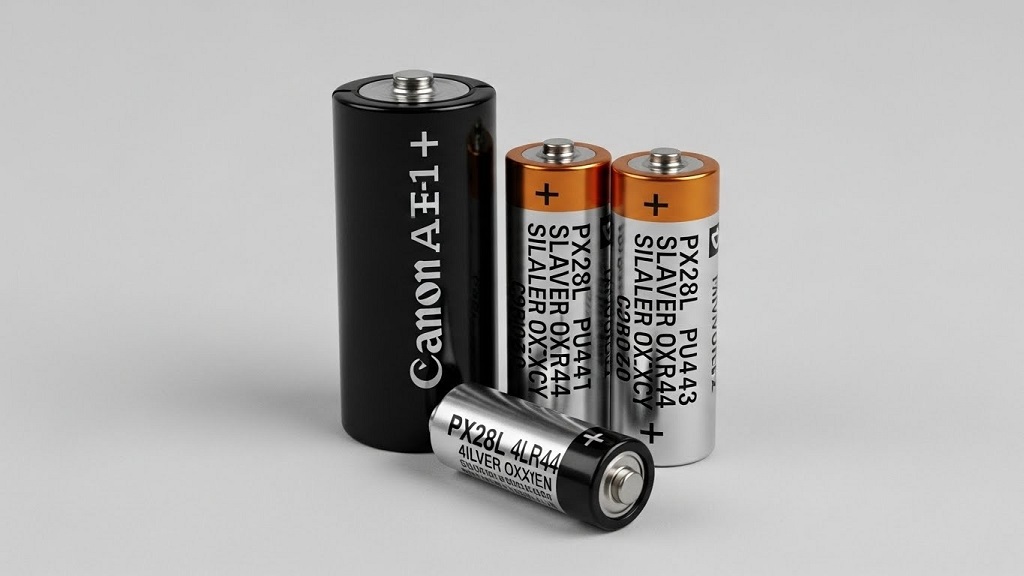
If you are searching for the “canon ae-1 6v battery type,” you are looking for a compact 6V stack of four button cells in one cylindrical package, about 13 mm in diameter and 25 mm tall. This size is sold under multiple codes, including PX28, 4LR44, A544 (alkaline) and 4SR44, S28PX, V28PX (silver oxide), all of which physically fit the AE-1.
The camera does not need a special “Canon-only” battery; it only needs the correct 6V voltage and form factor. However, the performance and longevity you get out of your AE-1 vary noticeably depending on whether you choose an alkaline, silver oxide, or lithium version of this 6V cell.
Main Battery Options (PX28L, 4LR44, Silver Oxide)
Here are the most common “best battery for Canon AE-1” choices you will find today:
-
4LR44 / PX28 / A544 alkaline: Widely available, affordable 6V alkaline battery marketed for cameras, pet collars, and small electronics.
-
4SR44 / S28PX / V28PX silver oxide: Same size as 4LR44 but silver oxide chemistry, sold specifically for cameras and instruments where stable voltage and long life matter.
-
PX28L / L544 / X28L lithium: Some brands sell 6V lithium PX28L-type cells that fit the AE-1, offering good cold-weather performance but with a different discharge profile than silver oxide.
All three work as a “px28l battery for canon ae-1” style solution, but their strengths differ in lifetime, voltage stability, cost, and leak risk.
Silver Oxide vs Alkaline AE-1 Battery
When comparing “silver oxide vs alkaline ae-1 battery,” the key difference is how each chemistry delivers voltage over time. Silver oxide cells hold a nearly constant output close to their rated voltage until they are nearly exhausted, then drop off quickly.
Alkaline cells start at their rated voltage but steadily decline as they discharge, meaning your AE-1 may see lower effective voltage even while the cell still has some capacity left. For devices with metering or timing circuits like film cameras, that flatter silver oxide discharge curve is generally preferred for predictable performance.
Estimated Battery Life: How Long They Last
Battery life in an AE-1 depends heavily on how much you shoot, how often you leave the meter switched on, and storage conditions, but typical ranges are well-documented.
-
Silver oxide 4SR44/S28PX: Many photographers report six months or more of regular use, with up to about a year possible from high-quality silver oxide cells in moderate use.
-
Alkaline 4LR44/PX28: Expect a shorter life span than silver oxide; with occasional shooting, users often replace them within a few months or start noticing metering or power issues sooner due to voltage sag.
-
Lithium PX28L/L544: These often fall somewhere in between in terms of practical life in a camera, with good shelf life but not necessarily outperforming a quality silver oxide cell in consistent voltage delivery.
Because the AE-1’s power draw is modest when the camera is off, many photographers effectively get “season-long” use from a silver oxide battery but prefer to swap annually as cheap insurance.
Pros and Cons by Chemistry
Here is a compact comparison to help decide the best battery for your Canon AE-1.
| Battery type | Codes you will see | Pros | Cons |
|---|---|---|---|
| Silver oxide 6V | 4SR44, S28PX, V28PX, PX28-S | Stable voltage, longer life, designed for cameras. | Slightly higher price, sometimes harder to find locally. |
| Alkaline 6V | 4LR44, PX28, A544 | Cheap, easy to find, works fine for casual use. | Shorter life, voltage drops gradually, more likely to leak over very long storage. |
| Lithium 6V | PX28L, L544, X28L | Good shelf life, lighter, decent cold-weather behavior. | Different discharge profile, not as standard in camera use as silver oxide. |
For a working shooter who values consistency, silver oxide is generally the best choice. For a budget-conscious or casual user, alkaline 4LR44 can still be fine, especially if you are comfortable replacing it more often and not leaving it in the camera for years.
PX28L and 4LR44: What You Really Get
When you see “PX28L” or “4LR44” advertised as a “px28l battery for canon ae-1,” you are mainly looking at marketing labels around the same compact 6V format. The “L” suffix in some brands refers to lithium, but many packs labeled 4LR44 or PX28 are simply alkaline cells stacked in a metal can.
Multiple vendors confirm that 4LR44, PX28, A544, and similar labels are interchangeable designations for the same 6V alkaline form factor, which fits perfectly in the AE-1 battery compartment. Lithium-marked PX28L/L544 cells also share the same size and are safe to use as long as they are 6V.
Does Battery Choice Affect Metering Accuracy?
There is long-running debate in film communities about whether the Canon AE-1 meter depends on a very tight 6V value or tolerates a range as the battery drains. Technical discussions and user tests indicate that while the AE-1 was originally specified with a 6V silver oxide cell, the actual metering circuit is not extremely sensitive to small voltage differences between silver oxide and modern alkaline cells.
This means that, in practical terms, any proper 6V PX28-type battery will give usable exposure readings as long as it is not nearly exhausted. The advantage of silver oxide remains that your AE-1 sees that correct region of voltage for a longer portion of the battery’s life, giving more consistent operation over time.
Practical Tips to Maximize Battery Life
Even the best battery for Canon AE-1 will die early if the camera is mishandled, so habits matter as much as chemistry.
-
Always switch the AE-1 off when not shooting, since the meter continues to draw power when the shutter button is partially pressed or the camera is left “awake.”
-
Remove the battery if the camera will sit unused for many months, especially if using alkaline, to reduce leak risk.
-
Store spare PX28, 4LR44, or silver oxide cells in a cool, dry place, within their rated shelf-life window, to preserve capacity.
If you shoot regularly, consider replacing the battery proactively every 6–12 months with a fresh silver oxide cell to avoid dead-meter surprises during an important roll.
Recommended Setup for Most AE-1 Users
For most photographers today, the ideal “canon ae-1 6v battery type” is a branded silver oxide 4SR44 or S28PX marketed as a replacement for PX28 mercury batteries. These batteries are explicitly designed as drop-in replacements for vintage cameras and instruments and typically advertise longer life and stable voltage compared with alkaline 4LR44 options.
If silver oxide is unavailable in your local market, a 4LR44/PX28 alkaline cell from a reputable manufacturer still powers the camera reliably, especially for occasional use or backup bodies. Just keep an eye on battery-test indicators and be more proactive about replacement and removal during long-term storage.
FAQs: Best Battery for Canon AE-1
What is the exact best battery for Canon AE-1?
The most recommended option is a 6V silver oxide battery labeled 4SR44, S28PX, or V28PX, sold as a replacement for PX28-type cells in vintage cameras.
Can I use a 4LR44 alkaline PX28 battery in my Canon AE-1?
Yes, 4LR44/PX28/A544 alkaline batteries are compatible with the AE-1, though they generally have shorter life and a less stable voltage curve than silver oxide.
Is PX28L (lithium) safe in the AE-1?
PX28L/L544 6V lithium batteries are physically compatible and safe as long as the voltage is 6V and the cell is from a reputable brand. They can offer good shelf life but are not necessarily superior to silver oxide in metering stability.
How long does a battery last in a Canon AE-1?
A quality silver oxide 4SR44 can last around six months to a year in regular use, while alkaline 4LR44 cells typically need replacement sooner under similar conditions.
Does battery type affect exposure accuracy?
Within the normal operating voltage range, the AE-1’s meter is not extremely sensitive to minor voltage differences between alkaline and silver oxide, but silver oxide keeps the voltage in the optimal range for a longer portion of its life.
Will the wrong voltage damage my Canon AE-1?
Yes, using a battery with the wrong voltage (for example, 3V or 12V cells with a similar size) can damage the camera’s electronics, so always ensure the replacement is a 6V PX28/4LR44/4SR44 type.
How can I tell if my AE-1 battery is low?
The AE-1 provides a battery-check function, and symptoms such as sluggish shutters, flickering LEDs, or an unresponsive meter often indicate the need for a fresh 6V cell.
Call to Action
Before your next roll, upgrade your Canon AE-1 with a fresh 6V silver oxide 4SR44 or S28PX battery so you can meter confidently, avoid mid-roll failures, and protect your camera from leaks. Add a spare PX28-style cell to your camera bag today and turn battery anxiety into worry-free shooting every time you head out.
Related Topics: Snapchat Planet Meanings
Related Topics: Bluetooth Accessibility for People with Disabilities